
Why it matters
One inch of rain on 1,000 square feet of roof is about 620 gallons of water, and your downspouts drop all of it in a few spots right next to the house. Move that water and a lot of “drainage problems” go away.
The quick fix: extensions
Add an extension so each downspout lets out at least 6 feet from the foundation (10 is better), onto ground that slopes away from the house. It’s cheap, it takes an hour, and it tells you fast whether the downspouts are your problem.
The permanent fix: a buried downspout drain
- Plan the route. Pick a spot lower than the downspout, well away from the house and not toward a neighbor. That’s where the pop-up emitter goes.
- Dig the trench. Keep a steady downhill slope of at least 1/8 inch per foot, deep enough to cover the pipe (usually 6 to 12 inches).
- Use solid pipe. Roof water should stay in the pipe until it’s far from the house, so use solid pipe, not perforated. Smooth-wall pipe is easier to clean out than corrugated.
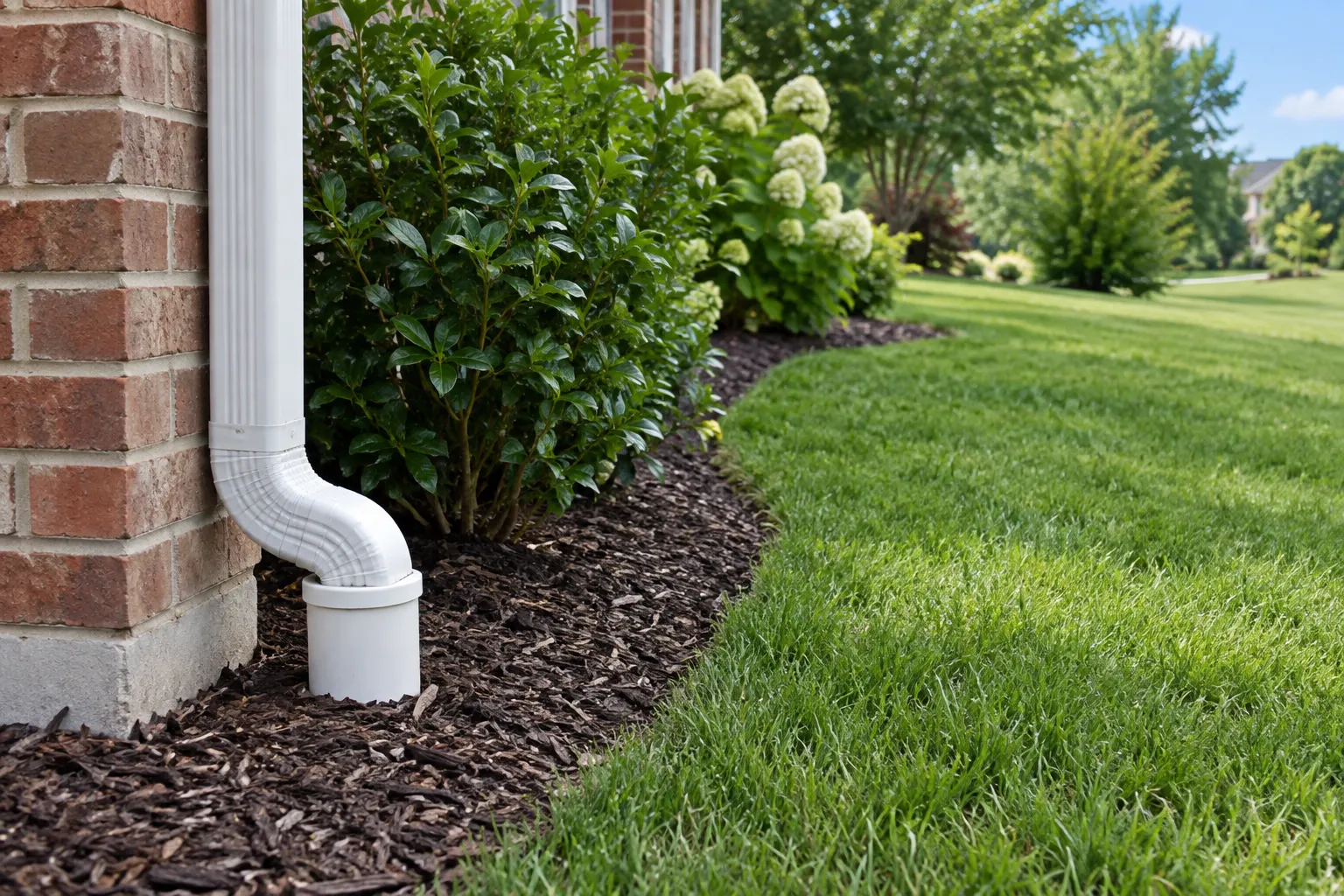
- Connect at the downspout. Attach a downspout adapter and run the pipe down the trench, checking the slope as you go.
- Set the pop-up emitter. At the low end, add an elbow and the emitter so its lid sits at ground level. A bit of gravel underneath lets leftover water soak out.
- Test before you bury. Run a hose into the gutter. Water should push the emitter open. Then backfill and put the sod back.
Cold climate? Make sure the whole line slopes so it drains empty between storms. Water sitting in the pipe can freeze.